Commercial refrigeration maintenance is one of the most important yet frequently overlooked responsibilities for business owners who rely on refrigeration to protect products, meet health regulations, and maintain daily operations. From restaurants and grocery stores to hospitals, convenience stores, and warehouses, refrigeration systems are the backbone of safe storage and operational continuity. When these systems fail, the consequences can include spoiled inventory, unexpected downtime, lost revenue, and even regulatory violations. Understanding how often maintenance should be performed and what that maintenance includes empowers business owners to make proactive decisions that save money and extend equipment life.
Why Commercial Refrigeration Maintenance is Critical
Commercial refrigeration systems operate around the clock, often under heavy loads and in demanding environments. Unlike residential units, these systems must maintain consistent temperatures despite frequent door openings, varying product loads, and sometimes extreme ambient conditions. Over time, even minor inefficiencies can escalate into major failures if they are not addressed early.
Regular maintenance helps prevent spoilage by ensuring that refrigeration units consistently hold safe temperatures. Food safety regulations require strict temperature control, and even brief deviations can result in product loss or health risks. For businesses that store pharmaceuticals, medical supplies, or temperature-sensitive chemicals, the stakes are even higher.
Maintenance is also essential for protecting your investment. Commercial refrigeration systems represent a high upfront cost, and replacing them prematurely due to neglect is expensive. Routine inspections, cleaning, and adjustments reduce wear and tear on components like compressors, evaporator coils, condenser fans, and thermostats. This proactive approach minimizes emergency breakdowns and extends the usable lifespan of your equipment.
Another critical factor is reliability. Unexpected refrigeration failures often occur at the worst possible times, such as during peak business hours, holidays, or overnight when staffing is limited. Preventive maintenance reduces the likelihood of sudden outages and allows service to be scheduled during planned downtime rather than in crisis mode.
Finally, regular service supports regulatory compliance and documentation. Health inspectors and regulatory agencies may request maintenance records, especially for food service and healthcare operations. Keeping detailed service logs demonstrates due diligence and commitment to safety standards.
How Often Commercial Refrigeration Maintenance Should Be Performed
The ideal maintenance schedule depends on several factors, including the type of equipment, usage patterns, operating environment, and manufacturer recommendations. However, most commercial refrigeration systems benefit from a layered maintenance approach that combines daily, monthly, quarterly, and annual tasks.
Daily and weekly checks are typically handled by on-site staff. These quick inspections help identify obvious issues early and ensure the system is operating as expected. Monthly tasks may involve light cleaning and visual inspections, while quarterly and annual maintenance should be performed by licensed professionals with the tools and expertise to service complex components.
In general, most businesses should schedule professional commercial refrigeration maintenance at least two to four times per year. High-use environments such as restaurants, grocery stores, and food processing facilities often benefit from quarterly service. Lower demand applications, such as storage facilities or specialty retail, may be adequately served with semiannual maintenance, supplemented by routine in-house checks.
Environmental factors also play a role. Units operating in dusty, greasy, or humid environments require more frequent cleaning and inspection. Coastal areas, for example, may experience corrosion issues that demand closer attention. Texas businesses face additional challenges from high heat and long cooling seasons, which place continuous strain on refrigeration systems.
Manufacturer guidelines should always be followed, as failing to adhere to recommended maintenance intervals can void warranties. A professional HVAC R contractor can help customize a maintenance plan based on your specific equipment and operational needs.
What’s Included in Professional Refrigeration Maintenance
Professional refrigeration maintenance goes far beyond a quick visual inspection. A comprehensive service visit addresses both performance and safety, ensuring that every major component is functioning efficiently and reliably.
Technicians begin by evaluating system operation, checking temperature accuracy, and confirming that controls and sensors are calibrated correctly. Electrical connections are inspected for signs of wear, corrosion, or overheating. Refrigerant levels are measured and adjusted as needed, and technicians look for leaks that could compromise performance or violate environmental regulations.
Cleaning is another major component of professional maintenance. Dirty condenser coils are one of the most common causes of refrigeration inefficiency and failure. When coils are clogged with dust, grease, or debris, the system must work harder to reject heat, increasing energy consumption and stress on the compressor. Professional cleaning restores proper airflow and heat transfer.
Additional tasks often include lubricating moving parts, tightening belts and fasteners, inspecting fan motors, and testing safety controls. Drain lines are cleared to prevent water backups and ice buildup, and door seals or gaskets are checked for leaks that allow cold air to escape.
Preventive Maintenance Tasks for Commercial Refrigeration Systems
Preventive maintenance focuses on identifying and resolving small issues before they become costly problems. Key tasks typically include:
Inspecting and cleaning condenser and evaporator coils to maintain efficient heat exchange
Checking refrigerant pressure and temperature to ensure proper charge levels
Testing thermostats, sensors, and control boards for accurate operation
Inspecting compressors, fans, and motors for abnormal noise or vibration
Cleaning and clearing condensate drains to prevent water damage and ice formation
Inspecting door gaskets and seals for cracks, gaps, or air leaks
Verifying electrical connections and safety switches
These tasks help maintain consistent temperatures, reduce strain on components, and prevent unexpected breakdowns that disrupt operations.
Warning Signs Your Refrigeration System Needs Service
Even with a regular maintenance schedule, it is important to recognize early warning signs that indicate your refrigeration system may need immediate service. Ignoring these signals can lead to product loss and equipment damage.
Common warning signs include fluctuating temperatures, longer run times, or difficulty maintaining set points. Unusual noises such as grinding, buzzing, or rattling often indicate mechanical or electrical issues. Excessive frost or ice buildup on coils or inside the unit can signal airflow problems, refrigerant issues, or faulty defrost systems.
Other red flags include water pooling around the unit, frequent cycling on and off, tripped breakers, or sudden spikes in energy bills. Any noticeable change in performance should prompt a service call, especially if the system supports critical inventory.
How Maintenance Improves Energy Efficiency and Compliance
Energy efficiency is a major concern for businesses operating commercial refrigeration equipment, as these systems are among the largest energy consumers in many facilities. Poorly maintained units require more power to achieve the same cooling output, driving up utility costs month after month.
Routine maintenance improves efficiency by keeping components clean, calibrated, and operating within design specifications. Clean coils allow heat to dissipate more effectively, reducing compressor workload. Proper refrigerant levels ensure optimal heat transfer, while well-sealed doors prevent cold air loss. Together, these factors reduce energy consumption and lower operating costs.
Maintenance also supports compliance with health, safety, and environmental regulations. Food safety standards require reliable temperature control, and documentation of regular maintenance helps demonstrate compliance during inspections. Refrigerant management is another critical area, as leaks can violate environmental regulations and result in fines. Professional technicians are trained to handle refrigerants responsibly and ensure systems meet regulatory requirements.
In addition, many equipment warranties and insurance policies require proof of regular maintenance. Skipping service can jeopardize coverage and leave businesses financially exposed in the event of a major failure.
Building a Proactive Maintenance Strategy
A proactive approach to commercial refrigeration maintenance combines scheduled professional service with daily awareness and staff training. Employees should understand the importance of temperature monitoring, cleanliness, and reporting unusual behavior promptly. Simple habits such as keeping doors closed, avoiding overloading units, and cleaning spills can support overall system health.
Partnering with a reliable service provider is equally important. An experienced HVAC R contractor can track service history, anticipate component wear, and recommend upgrades or replacements before failures occur. This strategic approach transforms maintenance from a reactive expense into a predictable investment that supports long-term business stability.
Partner with Accurate Air Solutions, LLC
When it comes to protecting your commercial refrigeration systems, having a dependable service partner makes all the difference. At Accurate Air Solutions, LLC, we understand that comfort cannot wait, and neither should you. That is why we provide reliable, 24/7 HVAC R, electrical, and plumbing services across Texas, with a strong presence in Abilene, Brownwood, San Angelo, Lubbock, and Galveston areas. Our experienced technicians deliver expert craftsmanship, round-the-clock availability, and customized solutions designed to fit your needs and your budget. Whether you are managing a restaurant, retail space, healthcare facility, or industrial operation, proactive refrigeration maintenance helps prevent spoilage, reduce downtime, and extend equipment life. From residential fixes to large-scale commercial projects, Accurate Air Solutions, LLC is your trusted partner for comfort, efficiency, and peace of mind. Contact us today to schedule service or learn more about how our maintenance programs can keep your business running smoothly.
An electrical system is the backbone of any commercial facility, supporting everything from lighting and HVAC equipment to computers, machinery, and safety systems. Before a building can operate efficiently and safely, one critical step must be completed correctly: the electrical load calculation for a commercial building. This process determines how much electrical power a building requires to function both now and in the future. Without accurate calculations, businesses can face frequent outages, unsafe conditions, costly retrofits, and compliance issues across facilities in Abilene, Lubbock, Brownwood, and throughout Texas.
Electrical load calculations are not just a technical formality. They directly influence system design, equipment selection, energy efficiency, and long-term scalability. Whether you are constructing a new commercial building, renovating an existing space, or planning to add new equipment, understanding how electrical load calculations work is essential. This guide explains what electrical load calculations are, how they are performed, why accuracy matters, and when professional expertise becomes critical.
What Is an Electrical Load Calculation for a Commercial Building?
An electrical load calculation for a commercial building is an analysis used to determine the total amount of electrical power the building will require under normal and peak operating conditions. It accounts for all electrical loads within the facility, including lighting, HVAC systems, receptacles, specialized equipment, and future expansion allowances.
In commercial settings, load calculations are more complex than in residential properties. Commercial buildings often include a variety of systems operating simultaneously, sometimes with high-demand loads such as commercial kitchens, data centers, manufacturing equipment, or medical devices. Load calculations help engineers and electricians determine the appropriate size for service panels, transformers, feeders, breakers, and wiring.
These calculations are required for permitting and code compliance and are guided by standards such as the National Electrical Code (NEC), published by the National Fire Protection Association. They ensure that electrical systems can handle expected demand without overheating, tripping breakers, or creating safety hazards.
Factors That Affect Electrical Load Calculations for Commercial Buildings
Several variables influence how electrical loads are calculated for commercial buildings. Understanding these factors helps explain why no two calculations are exactly the same.
Key factors include:
Building size and layout, including square footage and number of floors
Type of occupancy such as office, retail, healthcare, industrial, or mixed use
Lighting systems, including interior, exterior, and emergency lighting
HVAC systems, which often represent the largest electrical demand in a facility
Plug loads from computers, office equipment, appliances, and machinery
Specialty equipment such as elevators, refrigeration units, or production machinery
Operating hours and usage patterns throughout the day and week
Demand factors and load diversity, which account for equipment not running at full capacity at all times
Local electrical codes and utility requirements specific to your area
All of these elements must be considered together to create an accurate picture of the building’s electrical needs. Skipping or underestimating any single factor can result in a system that falls short under real operating conditions.
How to Calculate Electrical Load for a Commercial Building
Calculating electrical load for a commercial building is a step-by-step process that requires careful documentation and strict adherence to code standards. While the exact methodology may vary depending on building type and jurisdiction, the overall approach follows a consistent structure.
The process begins with identifying all electrical loads in the building, including both fixed loads such as lighting and HVAC systems, and variable loads such as receptacles and equipment.
Typical steps include:
Listing all electrical equipment and systems with their rated power in watts or volt-amps
Calculating lighting load based on square footage and lighting power density requirements
Accounting for HVAC equipment load, including compressors, air handlers, and control systems
Including receptacle loads using standard assumptions or actual equipment ratings
Applying demand factors to reflect realistic usage patterns
Summing all adjusted loads to determine the total connected load
Converting total load into amperage to size service equipment appropriately
For example, lighting loads are often calculated using watts per square foot, while HVAC equipment loads are based on manufacturer specifications. Demand factors reduce the total load to reflect the fact that not all systems operate at full capacity simultaneously.
Load calculations must also account for future needs. This may involve adding capacity for potential expansion, additional tenants, or upgraded equipment. Designing only for current demand can lead to expensive modifications later. Facilities that also rely on commercial refrigeration, for example, should factor in those loads carefully since refrigeration units run continuously and represent a consistent draw on the electrical system.
Commercial Electrical Load Calculation: Breaking Down the Numbers
To understand what a load calculation looks like in practice, it helps to walk through how individual loads are typically estimated for a mid-size commercial building.
Load Type
Typical Calculation Method
Example
General Lighting
Watts per square foot x total sq ft
3.5 W/sq ft x 10,000 sq ft = 35,000 W
Receptacles
180 VA per outlet (NEC standard)
50 outlets x 180 VA = 9,000 VA
HVAC Equipment
Manufacturer nameplate rating
Two 20A units = 40A dedicated load
Specialty Equipment
Actual rated load per device
Commercial kitchen: 60A dedicated circuit
Emergency Systems
Full load, no demand factor applied
Exit lighting, fire alarm, security systems
Once individual loads are totaled and demand factors applied, the result is converted to amperage to determine the minimum service size required. Most commercial facilities require a minimum of 200A service, with many larger buildings requiring 400A, 800A, or more depending on the occupancy type and equipment involved.
How HVAC Systems Affect Electrical Load Calculations
HVAC equipment consistently represents the largest single electrical load in most commercial buildings. Compressors, air handlers, exhaust fans, and control systems all draw significant power, and many of these systems must be sized on dedicated circuits. This is one reason why commercial HVAC services and electrical work are so closely connected.
When planning a load calculation, HVAC loads should be calculated at their full nameplate ratings. Demand factors are generally not applied to HVAC systems since compressors and air handlers are designed to run at or near full capacity when operating. In Texas climates, where cooling systems run for extended periods during summer, underestimating HVAC load can cause serious strain on an electrical system.
Businesses that are upgrading or adding HVAC equipment should always update their load calculations before installation to confirm the existing electrical service can support the additional demand. Our commercial electrical maintenance checklist includes guidance on reviewing load balance as part of routine inspections.
Why Accurate Load Calculations Are Critical
Accurate electrical load calculations are essential for safety, reliability, and cost control. Undersized systems can lead to overloaded circuits, frequent breaker trips, voltage drops, and fire hazards. Oversized systems, on the other hand, can increase installation costs unnecessarily and reduce energy efficiency.
One of the most important reasons for precise calculations is compliance. Electrical inspectors and utility providers often require documented load calculations before approving service connections. Incorrect or incomplete calculations can delay projects and lead to failed inspections.
Accurate calculations also support energy efficiency goals. Properly sized systems operate more efficiently, reduce wasted energy, and help control utility costs. This is especially important in commercial buildings where energy expenses represent a significant portion of operating costs. Businesses focused on reducing overhead should also review our tips on improving commercial HVAC energy efficiency, since electrical and HVAC savings often go hand in hand.
Risks of Underestimating Electrical Load Requirements
Underestimating electrical load is one of the most common and costly mistakes in commercial electrical design. The consequences affect both safety and business operations.
Common risks include:
Overloaded circuits that increase the risk of electrical fires
Frequent breaker trips that disrupt daily operations
Voltage drops that damage sensitive equipment over time
Inadequate capacity for future equipment additions or tenant changes
Costly system upgrades after installation that could have been avoided
Reduced equipment lifespan due to prolonged electrical stress
Failed inspections and permitting delays
In environments such as healthcare facilities, data centers, or manufacturing plants, electrical failures can have serious consequences beyond financial loss. Even in offices or retail spaces, unreliable electrical systems lead to downtime, lost revenue, and dissatisfied customers or tenants.
When to Involve a Professional Electrical Contractor
While basic electrical concepts can be understood by building owners and facility managers, commercial load calculations should almost always involve a licensed electrical contractor or engineer. Professional expertise is especially important for larger or more complex facilities.
You should involve a professional when:
Designing a new commercial building or tenant buildout
Renovating or expanding an existing facility
Adding high-demand equipment or heavy machinery
Experiencing recurring electrical issues such as tripped breakers or voltage fluctuations
Upgrading service capacity or replacing aging panels
Navigating permitting and inspection requirements
Preparing for a commercial property sale or lease transition
A professional electrical contractor understands local codes, demand factors, and best practices for your specific building type. They can also coordinate with HVAC and plumbing systems to ensure all building systems work together efficiently from the start.
Involving professionals early in the design process saves time and money by avoiding costly redesigns and ensuring compliance before work begins. Our commercial electrical services team works with facility managers and business owners across San Angelo, Lubbock, and the surrounding areas to complete accurate load assessments before any installation or upgrade begins.
Electrical Load Planning for Building Expansions and Renovations
One of the most overlooked times to revisit electrical load calculations is during a renovation or expansion. Many commercial buildings that were originally designed decades ago are now housing far more electrical equipment than was ever anticipated. Modern offices run dense networks of computers and servers. Restaurants have added high-draw kitchen equipment. Retailers have expanded their lighting and point-of-sale infrastructure.
When a facility grows or changes its use, the original electrical service may no longer be adequate. Signs that a load assessment is overdue include:
Breakers tripping repeatedly under normal operating conditions
Lights flickering or dimming when large equipment starts up
Outlets or panels that feel warm to the touch
A service panel that has no remaining capacity for new circuits
Older wiring that has not been inspected or updated in many years
Catching these warning signs early and scheduling a professional load assessment can prevent the kind of electrical failures that lead to business interruptions. For a broader look at what to check during routine inspections, see our guide to commercial electrical preventive maintenance.
Serving Commercial Facilities Across Texas
At Accurate Air Solutions, LLC, we provide expert electrical, HVAC/R, and plumbing services to commercial facilities throughout Texas. Our licensed electricians are experienced in performing load assessments, panel upgrades, service installations, and ongoing maintenance for a wide range of commercial building types. We serve businesses in Abilene, Brownwood, Lubbock, San Angelo, Midland, and Odessa with 24/7 availability for both planned projects and emergency service calls.
Whether you are starting a new build, expanding your current space, or simply want to know if your existing electrical system is properly sized for your operations, our team is ready to help. Contact us today to schedule a professional electrical load assessment and get the clarity your facility needs.
Frequently Asked Questions About Electrical Load Calculations
What is an electrical load calculation for a commercial building?
An electrical load calculation for a commercial building is an analysis that determines the total amount of electrical power a facility needs to operate safely under both normal and peak conditions. It accounts for all systems including lighting, HVAC, receptacles, and specialty equipment, and is used to properly size panels, feeders, breakers, and wiring.
How do you calculate electrical load for a commercial building?
The process involves listing all electrical equipment and systems, calculating loads for lighting and HVAC based on square footage and equipment ratings, applying NEC demand factors, summing all adjusted loads, and converting the total to amperage. The result determines the minimum service size required for the building.
Why are accurate electrical load calculations important?
Accurate load calculations prevent undersized or oversized systems, reduce fire and safety risks, ensure code compliance, and support long-term energy efficiency. Inaccurate calculations can lead to failed inspections, costly system upgrades, and electrical failures that disrupt business operations.
When should a commercial building have its electrical load reassessed?
A load reassessment is recommended whenever a facility undergoes renovation, expansion, or adds significant new equipment. It is also advisable when breakers trip frequently, lights flicker, outlets feel warm, or when the building’s electrical panel is running out of capacity for new circuits.
Do I need a licensed electrician for a commercial load calculation?
Yes. Commercial electrical load calculations involve complex variables, code compliance requirements, and safety considerations that require a licensed electrical contractor or engineer. Attempting to size a commercial electrical system without professional expertise can result in unsafe conditions, failed inspections, and expensive corrections later.
Does Accurate Air Solutions perform electrical load calculations in Texas?
Yes. Accurate Air Solutions provides electrical load assessments and commercial electrical services throughout Texas, including Abilene, Lubbock, Brownwood, San Angelo, Midland, and Odessa. Our team is available 24/7 for both planned projects and emergency electrical needs.
Commercial electrical maintenance is one of the most critical yet often overlooked aspects of managing a commercial property. From office buildings and retail centers to warehouses and healthcare facilities, electrical systems are the backbone of daily operations. When these systems are not properly maintained, the risks include safety hazards, costly downtime, equipment damage, and higher energy bills. A proactive maintenance approach helps business owners and facility managers across Abilene, Lubbock, Brownwood, and throughout Texas protect their investments, ensure compliance, and maintain reliable power for employees, customers, and tenants.
This guide breaks down exactly what should be on your commercial electrical maintenance checklist, why each component matters, and when it is time to bring in a licensed professional. By understanding what to inspect, test, and document, you can create a safer, more efficient, and more dependable electrical system for your facility.
Why Commercial Electrical Maintenance Is Essential
The National Electrical Code (NEC), published by the National Fire Protection Association, sets the baseline standards for safe electrical installation and maintenance in commercial facilities across the United States. Staying current with these requirements is a core part of any responsible maintenance program.
Electrical systems in commercial buildings operate under heavier loads and more complex demands than residential systems. Lighting, HVAC equipment, data centers, machinery, and safety systems all rely on consistent and properly distributed power. Over time, normal wear and tear, environmental conditions, and increased electrical demand can degrade components and create hidden risks.
Routine commercial electrical maintenance is essential for several reasons:
Improved safety by identifying fire hazards, faulty wiring, and overloaded circuits
Increased system reliability and reduced unexpected outages
Extended lifespan of electrical equipment and infrastructure
Lower operating costs through improved energy efficiency
Compliance with local electrical codes and insurance requirements
Without a structured maintenance plan, minor issues can escalate into major failures. A loose connection, for example, can generate heat, damage equipment, or even lead to an electrical fire. Preventive maintenance allows issues to be addressed before they disrupt operations or compromise safety. If you want to go even deeper on prevention, our guide to commercial electrical preventive maintenance covers additional inspection points worth reviewing alongside this checklist.
Commercial Electrical Maintenance Checklist: What to Include
An effective maintenance checklist covers all major components of a commercial electrical system. While the exact requirements may vary depending on building size and usage, the following areas should be reviewed regularly as part of any comprehensive program.
Preventive Maintenance Tasks for Commercial Electrical Systems
Preventive maintenance focuses on proactive inspections and servicing to reduce the likelihood of failures. These tasks are best performed on a scheduled basis, such as quarterly or annually, depending on system load and facility type.
Key preventive maintenance tasks include:
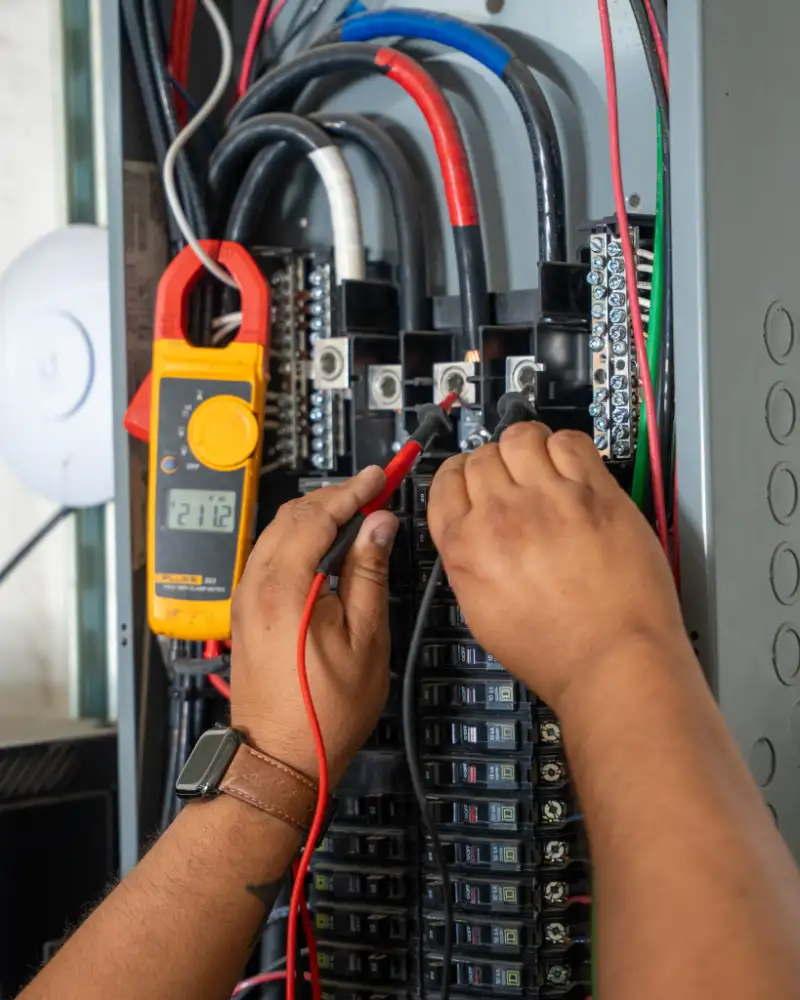
Inspecting electrical panels for corrosion, overheating, and loose connections
Checking circuit breakers and fuses for proper operation and correct sizing
Tightening electrical connections to manufacturer specifications
Cleaning panels and components to remove dust, debris, and moisture
Verifying proper labeling of panels, circuits, and disconnects
Inspecting wiring insulation for cracks, fraying, or discoloration
Reviewing load balance across phases to prevent overheating
Inspecting transformers for noise, leaks, or abnormal temperatures
Thermal imaging inspections are also highly recommended. Infrared scans can detect hot spots caused by resistance, loose connections, or overloaded circuits that are not visible during a standard visual inspection. Identifying these issues early helps prevent catastrophic failures and unplanned shutdowns.
Electrical Safety Risks in Commercial Facilities
Electrical hazards in commercial environments can have serious consequences, especially in facilities with high occupancy or specialized equipment. Understanding common safety risks highlights why routine maintenance is so important.
Some of the most common electrical safety risks in commercial buildings include:
Overloaded circuits caused by added equipment or system expansion
Aging wiring that no longer meets current electrical demands
Improper grounding and bonding
Damaged outlets, switches, or cords
Exposed wiring in mechanical rooms or ceiling spaces
Faulty emergency lighting and exit signage
Inadequate surge protection for sensitive electronics
These risks can lead to electric shock, fires, equipment damage, and regulatory violations. Regular inspections help identify unsafe conditions before an incident occurs. Maintenance records also provide documentation that safety checks are being performed, which is valuable for insurance audits and compliance reviews.
Lighting System Inspection and Maintenance
Lighting is a significant component of commercial electrical systems and a major contributor to energy usage. Poorly maintained lighting not only wastes energy but can also impact employee productivity and customer experience.
Lighting maintenance tasks should include:
Inspecting fixtures for damage, flickering, or inconsistent output
Replacing burned-out or failing lamps and ballasts
Cleaning lenses and reflectors to maximize light output
Checking emergency lighting and exit signs for proper operation
Evaluating opportunities to upgrade to LED lighting
Upgrading to energy-efficient lighting systems can significantly reduce utility costs while improving light quality. Maintenance inspections are an ideal time to assess whether existing fixtures are still performing efficiently or if upgrades would provide long-term savings. Businesses that also manage HVAC alongside their electrical systems often find that a coordinated approach helps reduce overall operating costs — you can learn more about that in our commercial HVAC preventive maintenance checklist.
Power Distribution and Equipment Checks
Power distribution equipment such as switchgear, panelboards, and transformers must be properly maintained to ensure stable electrical flow throughout the facility.
Checklist items for power distribution include:
Inspecting switchgear for signs of wear or overheating
Verifying proper operation of disconnects and safety devices
Checking clearances around electrical equipment to meet code requirements
Inspecting conduit and raceways for damage or corrosion
Ensuring equipment rooms are dry, clean, and properly ventilated
Mechanical damage, moisture intrusion, and poor ventilation can all shorten the lifespan of electrical equipment. Routine maintenance ensures these issues are corrected promptly and helps you avoid expensive emergency repairs down the road.
Understanding Electrical Load and System Capacity
One aspect of commercial electrical maintenance that often gets overlooked is understanding whether your building’s electrical system is properly sized for its current demands. As businesses grow and add equipment, the load placed on circuits and panels can exceed what was originally designed. Knowing how to assess this is critical before a failure occurs. For a detailed breakdown of how this works, see our guide on how to calculate electrical load for a commercial building.
During any maintenance inspection, electricians should:
Review current load data against panel ratings
Identify circuits consistently operating near capacity
Flag any recent equipment additions that were not accounted for in the original design
Recommend capacity upgrades before overloads cause damage or downtime
How Commercial Electrical Maintenance Prevents System Failures
System failures rarely happen without warning. In most cases, there are early signs such as unusual sounds, heat buildup, tripped breakers, or flickering lights. Scheduled commercial electrical maintenance is designed to catch these warning signs before they escalate into something far more costly.
Regular inspections and testing help prevent failures by:
Identifying worn components before they fail
Reducing electrical resistance caused by loose or corroded connections
Preventing overloads by monitoring system capacity
Ensuring protective devices function correctly during faults
Improving overall system stability and performance
Preventive maintenance also reduces downtime. Electrical failures can shut down operations, disrupt customers, and lead to lost revenue. Planned maintenance allows repairs and upgrades to be scheduled during off-hours, minimizing business disruption. Businesses in San Angelo and Lubbock dealing with the extreme heat and dust conditions of West Texas are especially vulnerable to accelerated equipment wear, making a consistent maintenance schedule even more important.
When to Hire a Licensed Commercial Electrician
While basic visual checks can be handled by trained maintenance staff, many aspects of commercial electrical maintenance require a licensed professional. Working on live electrical systems without proper training can be dangerous and may violate local codes.
You should hire a licensed commercial electrician when:
Performing panel inspections or internal repairs
Upgrading electrical capacity or adding new equipment
Conducting infrared thermography or advanced testing
Troubleshooting recurring electrical issues
Ensuring compliance with current electrical codes
Addressing safety concerns identified during inspections
Licensed electricians have the training, tools, and experience needed to safely diagnose and repair complex electrical systems. They also stay current on code changes and industry best practices, ensuring your facility remains compliant and safe. Our commercial electrical services team is available around the clock for both scheduled maintenance and emergency needs throughout Texas.
How Often Should Commercial Electrical Maintenance Be Performed?
The right maintenance frequency depends on your facility type, equipment age, and usage patterns. As a general guideline:
Maintenance Task
Recommended Frequency
Visual panel inspection
Monthly
GFCI/AFCI testing
Monthly
Full preventive maintenance inspection
Annually or semi-annually
Infrared thermography scan
Annually
Load capacity review
Whenever equipment is added
Lighting system audit
Annually
Emergency lighting test
Monthly
High-use facilities such as restaurants, manufacturing plants, and healthcare buildings may require more frequent inspections due to the heavy demands placed on their electrical infrastructure.
Creating a Long-Term Commercial Electrical Maintenance Plan
A checklist is most effective when it is part of a long-term maintenance strategy. This includes setting inspection intervals, documenting findings, and prioritizing repairs based on risk and urgency.
Best practices for maintenance planning include:
Scheduling routine inspections annually or semi-annually
Budgeting for upgrades and replacements before failures occur
Working with a trusted service provider who is familiar with your facility
A proactive approach not only improves safety and reliability but also supports energy efficiency goals. Well-maintained electrical systems operate more efficiently, reducing wasted energy and lowering operating costs over time. Businesses in Abilene and Brownwood that bundle electrical, HVAC, and plumbing maintenance with a single provider often find it easier to stay on schedule and catch cross-system issues faster.
Partner With a Trusted Commercial Electrical Service Provider
Commercial electrical maintenance is not just about fixing problems. It is about protecting people, equipment, and business continuity. A comprehensive checklist, combined with professional expertise, ensures your electrical systems can support your operations safely and efficiently for years to come.
At Accurate Air Solutions, LLC, we deliver reliable, 24/7 electrical, HVAC/R, and plumbing services across Texas. Our team serves commercial and residential customers throughout Abilene, Brownwood, Lubbock, San Angelo, Midland, and Odessa with expert craftsmanship and round-the-clock availability. Whether you need a scheduled maintenance inspection or an emergency service call, we are ready to help keep your systems running safely. Contact us today to schedule your commercial electrical maintenance and protect your facility from costly failures.
Frequently Asked Questions About Commercial Electrical Maintenance
How often should commercial electrical systems be inspected?
Most commercial facilities should schedule a full electrical inspection at least once a year. High-demand environments such as restaurants, data centers, and manufacturing facilities may benefit from semi-annual inspections. Monthly visual checks of panels and emergency lighting are recommended for all commercial properties.
What is included in a commercial electrical maintenance checklist?
A thorough checklist covers panel inspections, circuit breaker testing, GFCI and AFCI verification, wiring condition reviews, load balance assessments, lighting system audits, transformer inspections, and power distribution equipment checks. Infrared thermography is also recommended as part of an annual maintenance program.
Why is commercial electrical maintenance important?
Regular maintenance prevents unexpected failures, reduces fire and safety risks, extends the lifespan of electrical equipment, and helps businesses stay compliant with local codes. It also lowers long-term operating costs by catching small issues before they become expensive repairs or cause downtime.
Can my maintenance staff handle commercial electrical inspections?
Basic visual checks can be performed by trained in-house staff. However, internal panel work, infrared scanning, load testing, and any repairs to live systems must be performed by a licensed commercial electrician to ensure safety and code compliance.
Do you offer commercial electrical maintenance in Abilene and surrounding Texas cities?
Yes. Accurate Air Solutions provides commercial electrical maintenance and inspection services across Abilene, Brownwood, Lubbock, San Angelo, Midland, and Odessa. Our team is available 24/7 for both scheduled maintenance and emergency electrical service.
Yes! We offer financing and an easy application process.